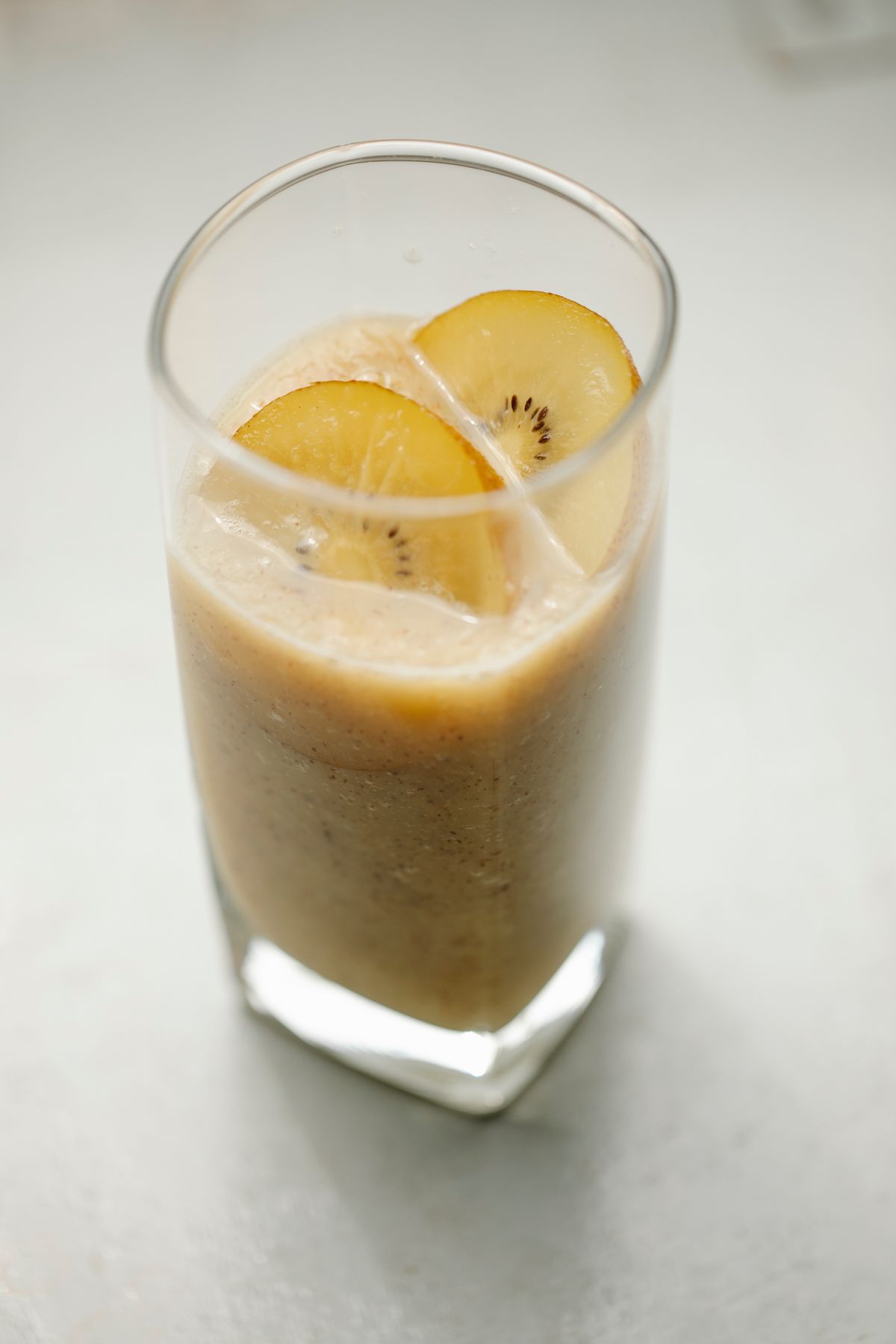
A yoghurt drink with mango at the centre
Lassi is a yoghurt-based drink with many sweet and savoury variations. This version combines ripe mango with plain yoghurt and a restrained amount of cardamom. It is not intended to reproduce every regional style: the aim is a smooth, gently tangy drink in which both mango and yoghurt remain recognisable.
Use a soft, fragrant mango rather than a firm fruit chosen for salad. Orange flesh does not by itself guarantee sweetness. Taste a small piece before deciding whether the optional sugar belongs in the drink. Tinned mango pulp can work, but many products are already sweetened, so check the ingredients and leave the extra sugar out at first.
Why the water matters
It is tempting to make lassi with nothing but thick yoghurt and mango, but that combination can become a dessert to eat with a spoon. Cold water loosens the mixture without introducing another flavour. Add it gradually because a juicy mango and a loose yoghurt need less thinning than dense pulp and strained yoghurt.
Cardamom becomes dominant surprisingly quickly. Start with the measured pinch, not an enthusiastic shake of the jar. If grinding whole pods, use only the seeds and grind them finely; pieces of husk spoil the smooth texture. The tiny amount of salt should not taste salty, but it can make a sweet mango taste less flat.
Working with mango pulp
If using tinned pulp, choose a product whose ingredients you can read clearly. Unsweetened pulp is the closest replacement for fresh mango flesh; sweetened pulp may make the optional sugar unnecessary and can taste noticeably different. Use 250 g initially, then add water gradually because commercial pulp can be much denser than freshly chopped fruit.
A ripe fresh mango can also have stringy areas near the stone. Trim these if your blender tends to leave fibres behind. Blending the mango with the water before adding yoghurt is another option for a particularly fibrous fruit. Straining is possible, but do it before the thick yoghurt is incorporated to avoid losing too much of the drink.
For a meal, serve the lassi cold in modest glasses and keep the garnish simple. Ground pistachio is sometimes used as a topping, but it is not included here because it adds both texture and a tree-nut allergen. A very small pinch of cardamom on the surface is enough if you want to echo the flavour already inside. Do not add a spoonful of dry spice to each glass.
What you'll need
- 250 g ripe mango flesh
- 180 g plain natural yoghurt
- 100 ml cold water
- 1/8 tsp ground cardamom
- 1–2 tsp caster sugar, optional
- A tiny pinch of fine salt
Let's make it
- Cut the mango flesh away from the stone and peel, then weigh it. Put the fruit, yoghurt and half the water in the blender.
- Add the cardamom and salt, then blend until there are no fibrous pieces. Pause to scrape down the jug with the machine switched off if necessary.
- Taste and add sugar only if the mango needs it. Blend in the remaining water gradually, stopping when the lassi pours comfortably; some mangoes need slightly less.
- Pour into two glasses. Serve immediately, or chill briefly and stir before serving.
Make it your own
For a richer lassi, replace 30 ml of the water with milk rather than adding cream.
For a dairy-free adaptation, choose plain unsweetened coconut yoghurt; its coconut flavour will remain noticeable and it may need less water.
Keeping it fresh
Cover and refrigerate promptly at 5°C or below if not serving immediately. Use within 24 hours for best texture, subject to the yoghurt's use-by and opened-pack guidance; stir any separation back in.
Allergen notes
Milk