Give the topping a purpose
A topping can add crunch, aroma or a clear hint of the flavour inside the glass. It does not need to do all three at once. A small amount of grated chocolate on a chocolate shake or fresh berry pieces on a fruit shake is often more useful than several unrelated sweets.
Start with the base recipe's sweetness. Ice cream already contributes sugar, so a large quantity of syrup, biscuits and confectionery can overwhelm the drink rather than improve it.
Match the topping to the utensil
Anything too large for a straw needs a spoon or should be served separately. Brownie cubes, whole berries and chopped nuts do not disappear because the drink beneath them is smooth. Tell guests what to expect and provide a practical way to eat it.
A wide straw handles fine crumbs better than a narrow one, but it still has limits. Avoid hard chunks that can lodge in it. A spoon is often the simplest choice for a deliberately thick dessert shake.
Keep dry toppings dry until serving
Biscuit crumbs and toasted coconut soften when they touch a moist surface. Crush or toast them in advance if useful, but store them separately and add them at the last moment.
Whipped cream provides a soft platform, not a waterproof barrier. Crumbs sitting on cream will still absorb moisture. If preparing several drinks, finish each close to serving rather than decorating all the glasses first and then beginning to blend.
Use syrup sparingly
A thin line inside a glass can show the flavour and add visual interest. A thick layer collects near the bottom, making the final mouthful much sweeter. Measure the swirl separately from syrup used in the base so you understand the total quantity.
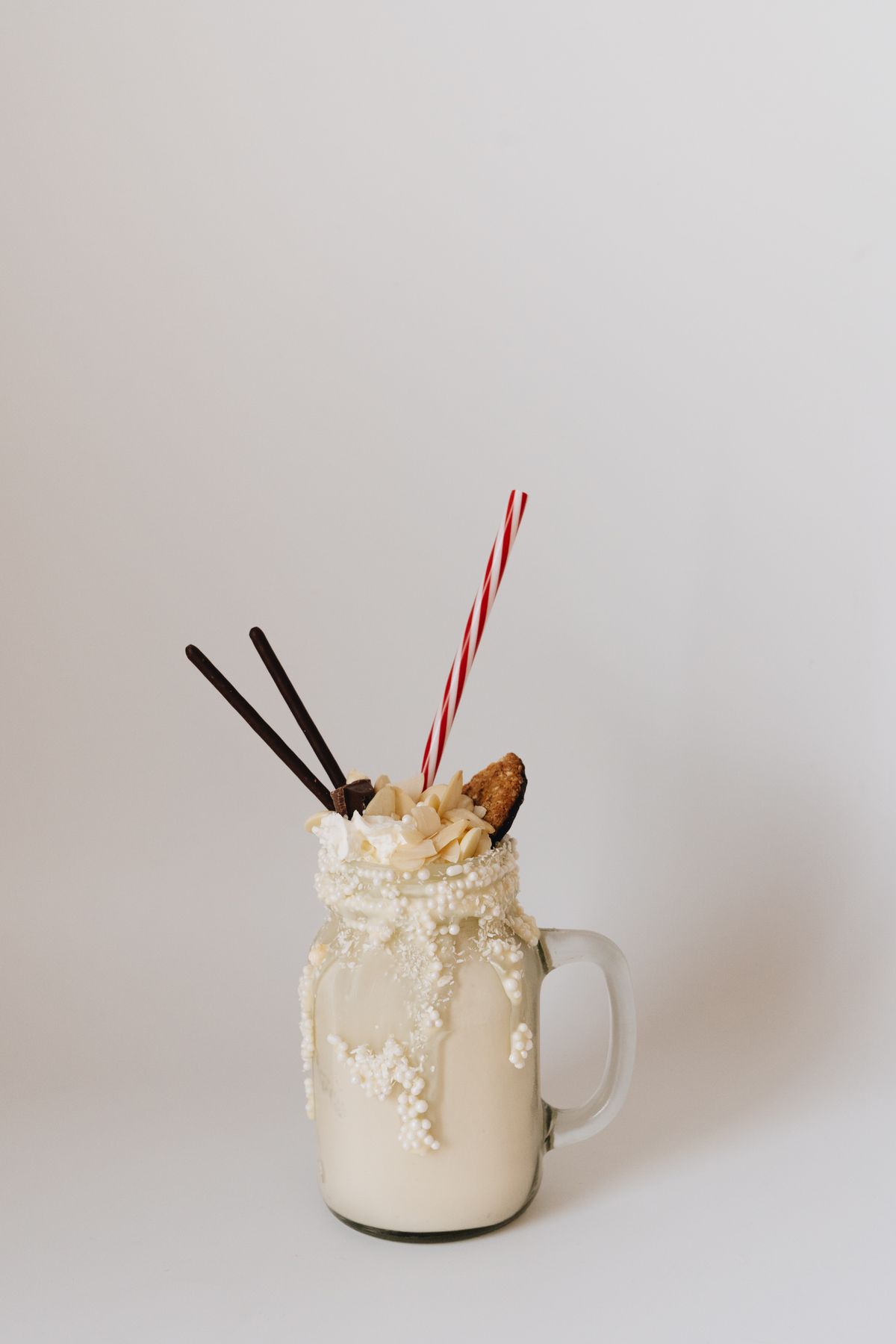
Avoid coating the outside rim heavily. Sticky rims transfer to hands and create drips down the glass. If you use a rim decoration, keep it narrow and place the glass on a small plate or coaster.
Think about allergens and hard pieces
Nuts, biscuits, chocolate and whipped cream can introduce allergens that were absent from the base. Check every topping, including decorations that seem too small to matter. Shared spoons and bowls can also transfer ingredients between drinks.
Do not hide cherry stones, fruit pips or hard decorative objects under cream. Use prepared edible fruit and keep non-food decorations out of the drink. If serving children, choose textures and sizes appropriate to them rather than prioritising a photograph.
Finish with restraint
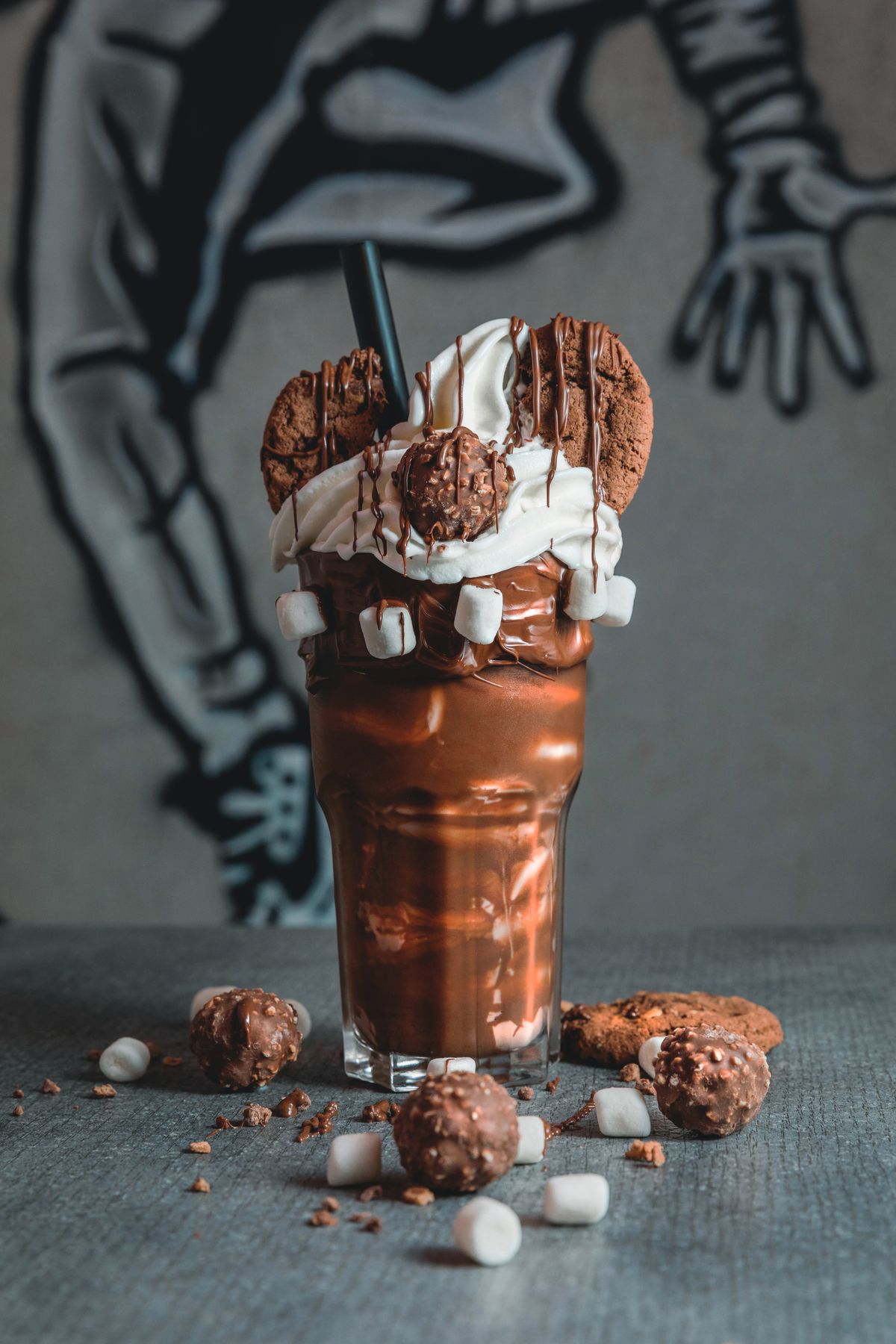
Pick one main texture and, at most, a small supporting garnish. For example, finely grated chocolate supplies gentle crunch while a single mint leaf adds aroma. There is no need to add a biscuit, sauce and chocolate bar as well.
The best test is whether the first sip or spoonful is easy to take. If someone must dismantle the glass before reaching the drink, move the extra components to a small plate alongside it.
Prepare a topping station sensibly
If people will finish their own drinks, place small serving spoons in separate bowls and keep perishable toppings chilled until needed. Offer a limited selection that suits the base rather than a crowded table of sweets. Separate utensils help prevent one topping becoming mixed into every bowl.
Whipped cream should remain refrigerated according to its product directions, and cut fruit should not sit out through a long gathering. Bring out modest quantities and replenish from chilled supplies if needed. Presentation is most useful when it supports straightforward serving and food handling, not when it encourages all the ingredients to wait on the table.